
Tschechien eSIM
Fixed data plansReliable data for your Czech Republic trip


Europe
Prague, historic towns, castles, seasons and mobile data tips
Cards are widely accepted, but some cash is useful for smaller businesses and local purchases.
English is widely used in Prague and other major visitor destinations.
The European emergency number is 112; national numbers include police 158, ambulance 155 and fire 150.
Type C and E plugs are commonly used.
These periods balance comfortable weather, outdoor sightseeing and generally lower crowds than midsummer.
Choose according to trip length, navigation, video use and hotspot needs.
The Czech Republic, also known as Czechia, is one of Central Europe’s easiest destinations to combine into a city break or multi-country itinerary. Prague provides the headline architecture and museums, while Český Krumlov, Brno, Karlovy Vary, Kutná Hora and South Moravia add castles, spa culture, wine country and smaller historic centres.
Need mobile data for your trip? Compare the Czech Republic eSIM and Czech Republic Unlimited Data eSIM before departure.
The country offers compact travel distances, strong rail and bus links, walkable historic centres and a wide range of experiences beyond Prague. Travellers can combine Gothic and baroque architecture, UNESCO-listed towns, castles, modernist design, spa destinations, breweries, vineyards and mountain landscapes.
April to June and September to October are excellent for comfortable sightseeing, outdoor travel and generally lower crowds than midsummer. July and August offer long daylight hours but are busiest in Prague and Český Krumlov. December is popular for festive markets, while January and February are colder and better suited to museums, cafés and winter activities.
Allow three to five days for Prague Castle, Charles Bridge, Old Town Square, museums and neighbourhoods beyond the historic centre. Early mornings are best for the busiest landmarks.
This compact South Bohemian town is known for its castle, medieval centre and river setting. Staying overnight provides a quieter experience after day-trip crowds leave.
Brno combines cafés, modernist architecture and a lively university atmosphere. It is also a useful gateway to Mikulov, vineyards and the Moravian Karst.
Karlovy Vary is a classic spa destination with thermal springs, colonnades and hillside viewpoints. It works as a day trip or a slower one- to three-night stay.
Kutná Hora is an accessible trip from Prague, with St Barbara’s Cathedral, the Sedlec Ossuary and a historic centre shaped by medieval silver mining.
Spring becomes progressively milder and is excellent for cities, castle grounds and gardens. Pack layers and rain protection.
Summer brings warm weather, long days and festivals. Reserve central Prague accommodation and major attractions early.
September and early October are particularly strong for cities, hiking and South Moravian wine travel. Temperatures fall quickly later in the season.
Winter is cold, with snow possible. Prague and historic towns are atmospheric during the festive period, while museums and cafés make practical cold-weather options.
Prague has an extensive public-transport system, while intercity trains and buses connect major destinations. Rail is useful for Prague, Brno, Olomouc and Pilsen; buses can be more convenient for Český Krumlov and some smaller towns. Check current schedules and ticket-validation rules before travel.
Most travellers need 5–10 GB for a one-week visit using maps, messaging, tickets, bookings and occasional social media. Choose 10–20 GB or unlimited data for longer itineraries, frequent video, hotspot use or remote work.
View Czech Republic fixed-data eSIM plans or compare unlimited-data options.
The Czech Republic uses 230 V electricity at 50 Hz, with Type C and E plugs. Travellers using different plug formats need an adapter. Confirm that appliances support 230 V because a plug adapter does not convert voltage.
Yes. Czechia is the official short geographic name, while Czech Republic remains widely used in travel searches and everyday English.
Three to five days works for Prague and one day trip. Seven to ten days provides time for South Bohemia, Brno, South Moravia or a spa town.
Prague is an excellent introduction, but adding Kutná Hora, Český Krumlov or Brno provides a more complete view of the country.
Cards are common, particularly in cities, but Czech koruna is useful for small businesses, markets and occasional transport purchases.
A Czech Republic eSIM is usually best for a country-only trip. A regional Europe eSIM is more convenient when crossing into Germany, Austria, Poland or other nearby countries.
Yes. Installation before departure is recommended, but activation timing depends on the specific plan instructions.
Ready to stay connected? Explore TravelFi’s Czech Republic eSIM and unlimited Czech Republic eSIM.
Get mobile data for your Czech Republic trip with a local or region-wide eSIM.
Reliable data for your Czech Republic trip

Unlimited data, no daily limits
TravelFi editorial destination ratings.
Strong connectivity in cities and major transport corridors, with normal variation in rural and mountain areas.
Prague is a leading European city-break destination, supported by Brno, Olomouc and smaller historic towns.
Rich architecture, castles, museums, UNESCO sites, music, brewing traditions and regional heritage.
Good transport and accommodation value outside Prague’s busiest central areas and peak dates.
Compact distances and extensive rail and bus links make multi-city itineraries practical.
230 V · 50 Hz
Two round pins. Usually ungrounded.
A grounded European plug with two round pins and a socket for the outlet's earth pin.
GroundedTravellers from countries using other plug types should bring a Type C or E-compatible travel adapter. Many European two-pin Type C plugs fit common sockets.
Check that chargers and appliances support 230 V and 50 Hz. A plug adapter changes the shape only and does not convert voltage.
Forecast location: Prague
The Czech Republic has a temperate continental climate with warm summers, cold winters and changeable spring and autumn conditions. Temperatures vary with elevation, and mountain areas are cooler and snowier.
Loading current weather…
Places to include in your Czech Republic itinerary.
The capital combines Prague Castle, Old Town, Charles Bridge, museums, neighbourhoods and extensive public transport.
Suggested stay: 3–5 days
A compact UNESCO-listed medieval town centred on a castle complex and the winding Vltava River.
Suggested stay: 1–2 days
A lively university city with modernist architecture, cafés, historic squares and access to South Moravia.
Suggested stay: 2–3 days
A famous spa town known for colonnades, thermal springs, hillside views and elegant architecture.
Suggested stay: 1–3 daysA historic silver-mining town known for St Barbara’s Cathedral and the Sedlec Ossuary.
Suggested stay: 1 dayA historic Moravian city with baroque monuments, a compact centre and fewer crowds than Prague.
Suggested stay: 1–2 daysA western Czech city associated with brewing heritage, industrial history and a walkable centre.
Suggested stay: 1–2 daysA northern city offering mountain access, architecture and family attractions near the Jizera Mountains.
Suggested stay: 1–3 daysA South Bohemian regional centre with a large historic square and convenient links to nearby towns and castles.
Suggested stay: 1–2 daysFeatured experiences and landmarks.

A vast historic complex above the Vltava containing St Vitus Cathedral, palaces, courtyards and gardens.
Suggested visit: 3–5 hours
Prague’s iconic pedestrian bridge links Old Town and Malá Strana with river and skyline views.
Suggested visit: 30–60 minutes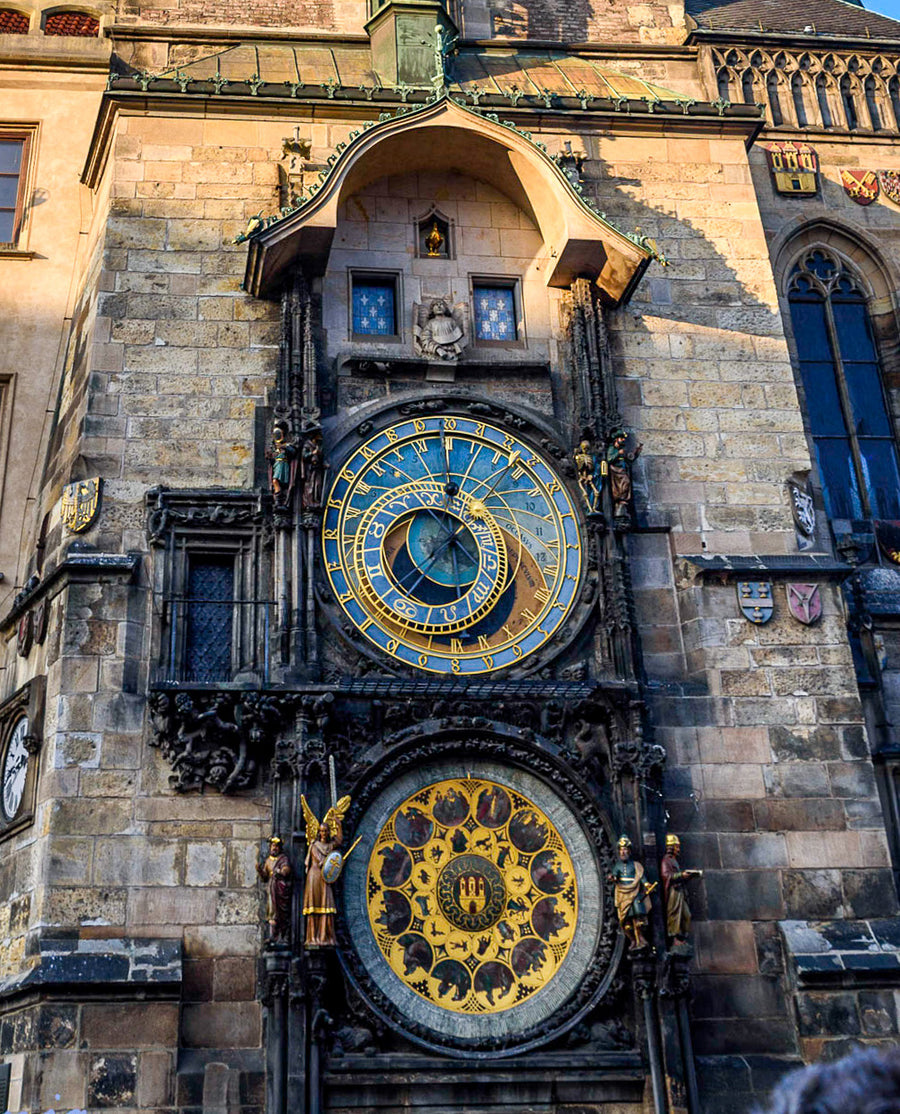
The heart of Prague’s Old Town, surrounded by landmark architecture and the medieval astronomical clock.
Suggested visit: 1–2 hours
A major castle and chateau complex overlooking Český Krumlov’s medieval centre and river bends.
Suggested visit: 2–4 hoursA UNESCO-listed modernist villa in Brno designed by Ludwig Mies van der Rohe.
Suggested visit: 1–2 hoursA small chapel in Kutná Hora famous for artistic decoration made from human bones.
Suggested visit: 45–90 minutesA striking Gothic cathedral reflecting Kutná Hora’s wealth from medieval silver mining.
Suggested visit: 1–2 hoursElegant colonnades shelter thermal springs throughout Karlovy Vary’s central spa district.
Suggested visit: 2–3 hoursA UNESCO-listed Renaissance castle known for its arcaded courtyard and decorative sgraffito exterior.
Suggested visit: 2–3 hoursCompare seasons and plan the right time for your trip to Czech Republic.
Spring transitions from cool and changeable conditions into one of the best periods for Prague, castles, gardens and regional touring.
Pack layers, a waterproof jacket and comfortable walking shoes; mornings and evenings can remain cool.
Summer offers long days and strong outdoor conditions, but Prague and major attractions are busiest and short thunderstorms are possible.
Bring light clothing, sun protection, a rain layer and comfortable shoes; include a light jacket for cooler evenings.
September and early October are excellent for city and regional travel, while late autumn becomes cooler and better suited to museums and indoor culture.
Use layers and bring rain protection; a warmer jacket becomes important in October and November.
Winter is atmospheric in Prague and historic towns, especially during Christmas-market season, while mountain areas offer seasonal snow activities.
Bring a warm insulated coat, waterproof footwear, gloves, a hat and layers suitable for freezing conditions.
Check dates and official sources before making travel decisions.
The Czech Republic is part of the Schengen area. Entry, visa and border-system requirements vary by nationality and travel circumstances, so travellers should confirm current official guidance before departure.

Plan a Czech Republic trip with Prague highlights, historic towns, seasonal guidance, transport tips and eSIM options.

