
Marokko eSIM
Fixed data plansReliable data for your Morocco trip


Africa
Morocco combines historic medinas, Atlantic and Mediterranean coasts, the Atlas Mountains, desert gateways and distinctive food and craft traditions. Mobile data is useful for navigation, transport, reservations and road trips.
Cards are common in larger businesses, but cash remains useful in medinas and smaller towns.
French is also widely used in tourism, transport and business.
Emergency numbers can vary by service and location.
Type C and E plugs are commonly used.
Spring and autumn provide comfortable conditions for most multi-region trips.
Choose more or unlimited data for road trips, video and hotspot use.
Morocco brings together historic medinas, Atlantic and Mediterranean coasts, the Atlas Mountains and Sahara gateways. This guide covers the best destinations, seasonal planning, practical travel advice and mobile connectivity.
Allow three to four days for Jemaa el-Fnaa, palaces, gardens, markets and food experiences.
Fes is ideal for travellers interested in historic architecture, traditional crafts and one of the region’s most extensive old medinas.
Northern Morocco combines the blue streets of Chefchaouen with Tangier’s port history and views toward the Strait of Gibraltar.
Essaouira offers a fortified medina and creative atmosphere, while Agadir is better suited to a modern resort and beach stay.
Ouarzazate, Aït Benhaddou, Todra Gorge and Merzouga form a strong inland route. Travel times are long, so allow several days and plan transport carefully.
Spring and autumn provide the best balance for cities, mountains and desert routes. Summer favours the Atlantic coast because inland heat can be severe. Winter works well for cities and desert travel, but mountain areas and desert nights can be cold.
Most travellers need 5–10 GB for one week of maps, messaging and bookings. Choose 10–20 GB or unlimited data for road trips, frequent video or hotspot use.
Install your TravelFi eSIM before departure and keep offline maps available for mountain and desert routes where coverage can vary.
Seven days is enough for one or two regions. Ten to fourteen days is better for combining imperial cities, the coast and a desert route.
Yes, but distances and mountain roads require realistic timing. Mobile data and downloaded maps are especially useful.
Fixed data suits normal navigation and messaging. Unlimited plans are better for heavier use, video and hotspot needs.
Stay connected: Compare TravelFi Morocco fixed-data and unlimited eSIM plans before departure.
Get mobile data for your Morocco trip with a local or region-wide eSIM.
Reliable data for your Morocco trip

Unlimited data, no daily limits
TravelFi editorial destination ratings.
Exceptional medinas, architecture, crafts, cuisine and regional traditions.
Broad accommodation and food choices across budgets.
Highly varied landscapes, though travel distances require realistic planning.
Strong service in cities and main corridors, with more variation in remote terrain.
Good family options, but heat, distances and busy medinas require planning.
220 V · 50 Hz
Two round pins. Usually ungrounded.
A grounded European plug with two round pins and a socket for the outlet's earth pin.
GroundedMorocco uses Type C and E sockets. Travellers using other plug systems should carry a Type C/E-compatible or universal adapter.
Morocco supplies 220 V at 50 Hz. Check that devices support 220–240 V before use.
Forecast location: Marrakech, Morocco
Morocco combines Atlantic and Mediterranean coastal climates, hotter continental interiors, cooler Atlas Mountain conditions and arid desert weather in the southeast.
Loading current weather…
Places to include in your Morocco itinerary.
A major cultural destination known for its medina, gardens, palaces, markets and food scene.
Suggested stay: 3–4 daysMorocco’s largest city and primary international gateway, combining modern districts with major architecture.
Suggested stay: 1–2 daysA historic imperial city centred on an extensive old medina, traditional crafts and religious architecture.
Suggested stay: 2–3 daysMorocco’s capital offers historic monuments, coastal views, museums and a calmer urban atmosphere.
Suggested stay: 1–2 daysA photogenic Rif Mountains town known for blue-painted streets, relaxed walking and nearby hikes.
Suggested stay: 1–2 daysA breezy Atlantic port with a fortified medina, seafood, beaches and a creative atmosphere.
Suggested stay: 2–3 daysA northern port city overlooking the Strait of Gibraltar with a historic medina and international character.
Suggested stay: 1–3 daysA southern gateway for kasbahs, film locations, desert routes and the High Atlas region.
Suggested stay: 1–2 daysA modern Atlantic resort city with a long beach, promenade and access to the Souss region.
Suggested stay: 3–5 daysFeatured experiences and landmarks.
Marrakech’s central square is a lively hub of food stalls, performers and medina activity.
Suggested visit: 2–4 hoursA richly decorated historic palace with courtyards, gardens and intricate Moroccan craftsmanship.
Suggested visit: 1–2 hoursThe old city of Fes is a dense network of lanes, markets, workshops, mosques and historic buildings.
Suggested visit: Half or full dayA monumental oceanfront mosque in Casablanca known for its scale and detailed architecture.
Suggested visit: 1–2 hoursA compact medina famous for blue-painted lanes, mountain views and relaxed exploration.
Suggested visit: 3–6 hoursA striking earthen ksar near Ouarzazate and one of Morocco’s best-known historic landscapes.
Suggested visit: 2–3 hoursTall Sahara dunes near Merzouga provide sunrise, sunset and overnight desert experiences.
Suggested visit: Half day to overnightA dramatic canyon in the eastern High Atlas popular for scenic drives, walks and climbing.
Suggested visit: 2–5 hoursA fortified Atlantic medina with ramparts, galleries, markets and a working fishing port.
Suggested visit: Half dayMarch to May and September to November are generally comfortable for cities, coasts and inland travel. Winter is mild on the coast but cold in the mountains and desert at night, while summer can be extremely hot inland.
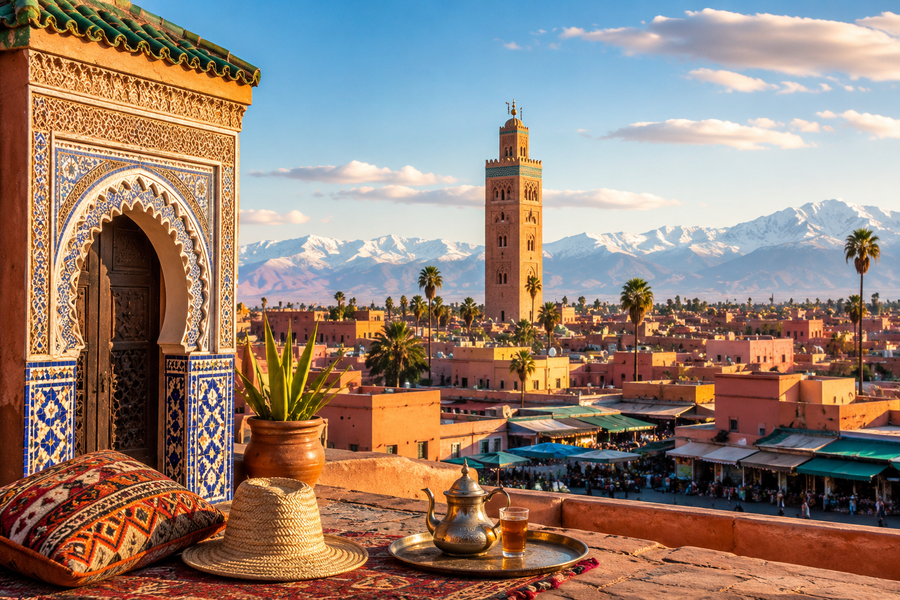
Plan a Morocco trip with guidance on Marrakech, Fes, the Atlas Mountains, Sahara routes, coasts, seasons and travel eSIM options.


